
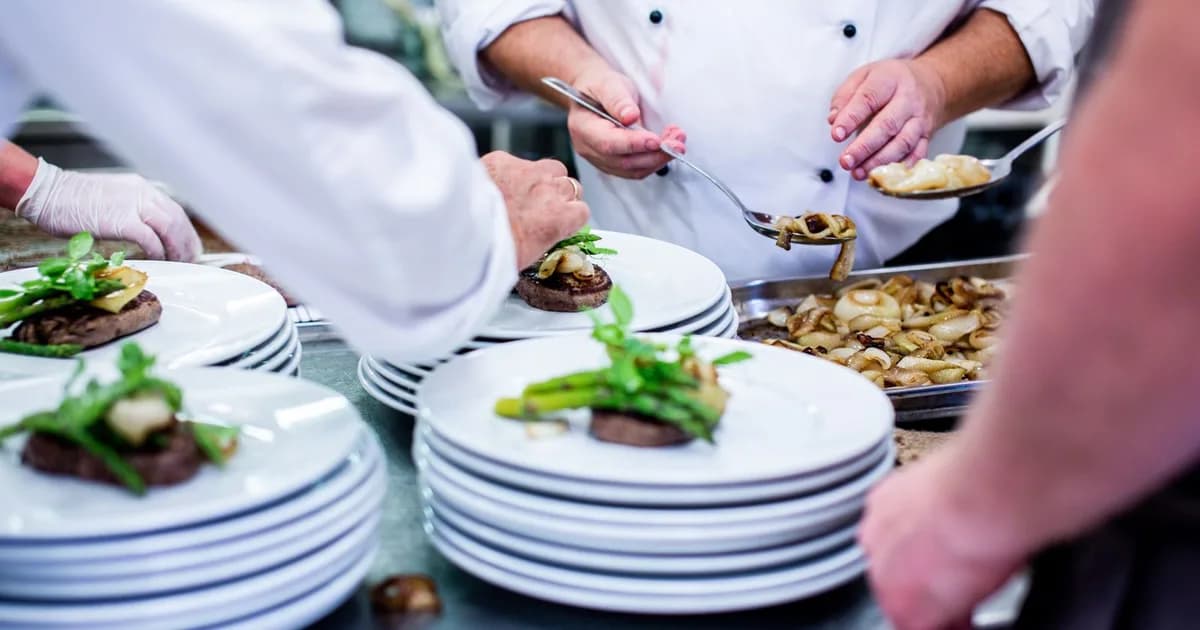
Half past eight, three plates in hand
The scene is familiar to anyone who has worked front of house. Every table is taken, the kitchen is sending out dishes, a customer is waiting for the bill and the phone rings by the till. The server who picks up abandons someone; the one who doesn’t lets a table for tomorrow slip away.
The worst scenario is the compromise: answering with one hand, jotting a booking on the back of a receipt, forgetting to ask for the number. The next day, the table for six cannot be found in the bookings book, or has been booked twice.
What callers actually ask for
By listening to a week’s worth of calls, a restaurant owner can draw up a list along these lines: booking a table, checking whether you are open on Mondays, finding out the dish of the day, asking whether they can come with a dog or a pushchair, checking that there is still room tonight. None of these requests requires the expertise of the chef or the manager.
These questions have one thing in common: the answer can be prepared in advance. Opening hours, the menu, accessibility and the policy for groups can be provided once and for all, then updated when they change.
Sometimes the call concerns a customer who has already been in: a forgotten umbrella, a question about the bill, a compliment for the chef. Nothing urgent, but these calls deserve to be noted and passed on, because they help maintain the relationship with regulars.
Allergies: a question that must go to the team
There is, however, one category of call that no automated system should settle on its own: specific questions about allergies and intolerances. Guaranteeing that a dish contains no trace of an allergen requires knowing the day’s recipe, the suppliers and the risks of cross-contamination in the kitchen.
The prudent instruction is to note the request and pass it on, or to transfer the call to someone able to answer. A callback after service is better than an inaccurate statement over the phone.
Groups and private hire: the calls worth the trouble
Among the routine requests, high-value calls slip through: a company meal for thirty, a birthday, an exclusive hire on a Saturday evening. These are precisely the ones that cannot be handled between two courses, and the ones you most regret missing.
For these requests, the aim is not to close the deal during service but to lose nothing: the proposed date, number of people, indicative budget, contact details. The manager calls back the next morning with all the details to hand and a tailored proposal.
These requests can come in waves, in the run-up to the end-of-year festivities or when the warm weather arrives. Recording them in the same format makes it possible to compare them and choose the ones that best fit the restaurant’s calendar.
Staying in control of your table plan
For a phone assistant to record bookings itself, it must be connectable to the restaurant’s calendar. Alyas, for example, connects to Google Calendar or Cal.com, but not to restaurant booking software, and it does not manage cover numbers. When that connection is in place, the restaurant’s rules, such as closing days or the time of last orders, must be carefully reflected in the calendar.
For establishments that prefer to keep control, another arrangement also works: the call is taken, the request noted, and a member of the team confirms it after service. The key is that the dining room is no longer interrupted.
A line that answers while the dining room is busy
Alyas picks up for the restaurant during service and outside opening hours: the voice agent introduces itself as an AI, answers questions about opening hours, the menu and access from your information, records group requests, transfers whatever you ask it to transfer and gives you the summary of every call. If your bookings go through Google Calendar or Cal.com, it can add the slots there. A ten-day free trial lets you fine-tune it over a few services.
Frequently asked questions
Can a phone assistant answer questions about allergens?
Preferably not. These questions should be passed on to the team or transferred to someone who knows the day’s recipe and the risks in the kitchen.
How can you avoid missing group requests during service?
By systematically collecting the date, number of people, indicative budget and contact details, so that the manager can call back the next day with a complete proposal.