
Before automation: operators and exchanges
According to the Science Museum in London, Alexander Graham Bell patented the telephone in 1876. For a long time, operators, the “hello girls”, connected calls by hand. The museum dates to May 1912 the British Post Office’s opening of the first automatic exchange on the public network, at Epsom, and states that the last manual exchange in the London area, at Upminster, was converted in 1970, and that the last one in mainland UK, at Abingdon, closed in 1975.
A principle can be read into this that recurs later: automation first takes over repetitive gestures, here connecting calls, before tackling the content of the conversation.
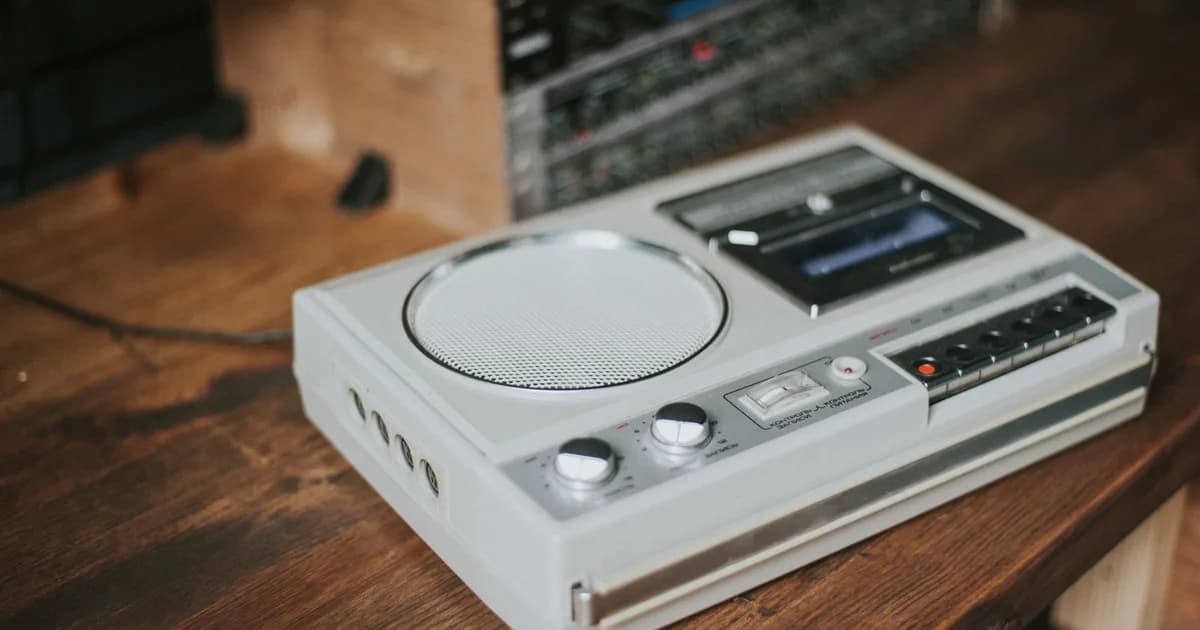
The answering machine: recording a message when the person called is absent
The idea of recording the voice on the telephone goes back to the Telegraphone of the Dane Valdemar Poulsen. According to the National Inventors Hall of Fame (United States), he filed in 1898 in Denmark and other countries a patent for this first magnetic sound-recording device, tried to make a telephone answering machine from it and, at the 1900 Paris World’s Fair, recorded the voice of Emperor Franz Joseph. According to Wikipedia, the invention did not achieve financial success.
The origin of the first automatic answering machine remains disputed: the Wikipedia encyclopedia notes competing claims from around 1929 to 1935 and states that the creation of the first practical device is a subject of controversy. The same article presents the Electronic Secretary of Joseph Zimmerman and George W. Danner, from 1949, as the first commercially successful answering machine; the historian David L. Morton Jr., on his site Recording History, describes it more cautiously as one of the first widely distributed post-war answering machines in the United States. According to the same site, the take-off came after the break-up of AT&T in 1984, when American subscribers could buy their equipment freely: sales then exceeded one million units a year.
The difference between the answering machine and the voice response server lies in the nature of the exchange: the answering machine records without interpreting, the voice response server offers a route prepared in advance, and neither really holds a dialogue with the caller.
Keypads, voice response servers and menus
According to the Telephone Museum (Maine, United States), on 18 November 1963, the Touch-Tone service, with push-button telephones in place of the dial, was introduced in Carnegie and Greensburg, Pennsylvania; it relies on the Bell System’s tone dialling (DTMF). The keys become a channel: the caller can send digits to a system, which replies with a pre-recorded voice.
According to the IBM archives’ chronology, on 24 January 1964, the Data Processing division presented the IBM 7770 audio response unit, designed to make information stored in a computer accessible by telephone; Wikipedia states that it is used with a push-button telephone. Also according to Wikipedia, the technique was still considered complex and costly in the 1970s; in the early 1980s, Perception Technology, of Leon Ferber, became the first major competitor in the interactive voice response market, once disk storage had become affordable. Wikipedia places at the end of the 1990s the integration of these servers into call-centre computer systems, then, from the 2000s, more common and less costly deployment.
The milestones above come mainly from British and American sources. The French history of automated phone reception has its own landmarks, which we have not documented here for lack of primary sources consulted.
Voice assistants and AI agents
On 4 October 2011, Apple announced the iPhone 4S, available from 14 October, and presented Siri, in beta, as an assistant that helps get things done simply by asking. On 8 May 2018, Google Research presented Duplex, an AI system designed to accomplish tasks over the phone, such as booking a table or a hair appointment, stressing transparency towards the people it speaks to.
These two stages mark a shift: the machine no longer merely offers a menu, it understands a request put in everyday language. On the regulatory side, Article 50 of the EU Artificial Intelligence Act (the AI Act) provides that people must be informed when they interact with an AI system, unless this is obvious from the context, and, according to the European Commission, this article has applied since 2 August 2026.
The difference from keypad menus lies in the form of the exchange: instead of choosing an option from a list fixed in advance, the caller expresses the request in their own words. The difficulty then shifts to the reliability of the answers and to transparency, that is, knowing what the machine knows and what it does not.
What we can take from it
At each stage, the tool has changed, not the question: what to do with the calls you cannot take? The answering machine says “leave a message”, the voice response server says “press 1”, the voice agent tries to answer the request itself. From the caller’s point of view, one may think the expectation stays similar: to be understood, to be directed, to know what will happen next.
Alyas belongs to this last stage: as an AI voice agent, it answers the phone using the information you give it, announces at the start of the call that it is an AI and that the call is recorded, captures the caller’s contact details and leaves the transcript and summary in your workspace. If it does not know, it says so and offers to pass the request on. The trial is free for 10 days, with no card required.
Frequently asked questions
Who invented the telephone answering machine?
The question is disputed. Magnetic recording of the voice goes back to Valdemar Poulsen’s Telegraphone (patent filed in 1898), but Wikipedia notes several claims for the first automatic answering machine between 1929 and 1935. The 1949 Electronic Secretary is presented there as the first commercial success, a point that other sources word more cautiously.
When did interactive voice response servers appear?
According to the IBM archives, the IBM 7770 audio response unit, presented on 24 January 1964, made information stored in a computer accessible by telephone. According to Wikipedia, these techniques remained costly in the 1970s, and the market opened up in the early 1980s.
Must an AI voice agent introduce itself as such?
The EU AI Act, in its Article 50, provides for informing people that they are interacting with an AI system, unless this is obvious from the context. According to the European Commission, this article has applied since 2 August 2026.
Sources
- Science Museum: Goodbye to the hello girls, automating the telephone exchange
- Wikipedia (English): Telegraphone
- Wikipedia (English): Answering machine
- Wikipedia (English): Push-button telephone
- Wikipedia (English): IBM Audio Response Units
- Wikipedia (English): Interactive voice response
- Apple Newsroom, 4 October 2011: launch of the iPhone 4S and Siri
- Google Research: Google Duplex (8 May 2018)
- European Commission, AI Act Service Desk, Article 50
- European Commission, FAQ on the transparency obligations of Article 50 of the AI Act (updated 24 July 2026)
- National Inventors Hall of Fame: Valdemar Poulsen
- Recording History (David L. Morton Jr.): Expanding Use of the Answering Machine in the 1950s
- Recording History (David L. Morton Jr.): The 1980s: Answering Machines Take Off… and then Crash
- The Telephone Museum: On This Day in Telephone History, November 18th 1963
- IBM Archives: DPD chronology, page 2 (copy archived by the Internet Archive)