
Definition and vocabulary
AWS defines conversational AI as technology that enables software to understand and respond to human conversations, whether spoken or written. IBM describes it as the technologies, such as chatbots or virtual agents, that users can talk to, and which use large volumes of data, machine learning and natural language processing to imitate human interactions.
In French, the official vocabulary is more precise than everyday usage. France’s Commission for the Enrichment of the French Language published the term “dialogueur” in the Journal officiel (France’s official gazette) of 9 December 2018, with “agent de dialogue” (dialogue agent) as a synonym: software specialised in natural-language dialogue with a human, able in particular to answer questions or trigger the execution of tasks. The same entry states that the expression “agent conversationnel” (conversational agent), which is also used, is not recommended.
Whatever name you use, conversational AI is not a product but a family of techniques. A website chatbot, a voice agent that answers the phone and an assistant on a messaging app are three applications of it, each with different constraints.
The technical building blocks
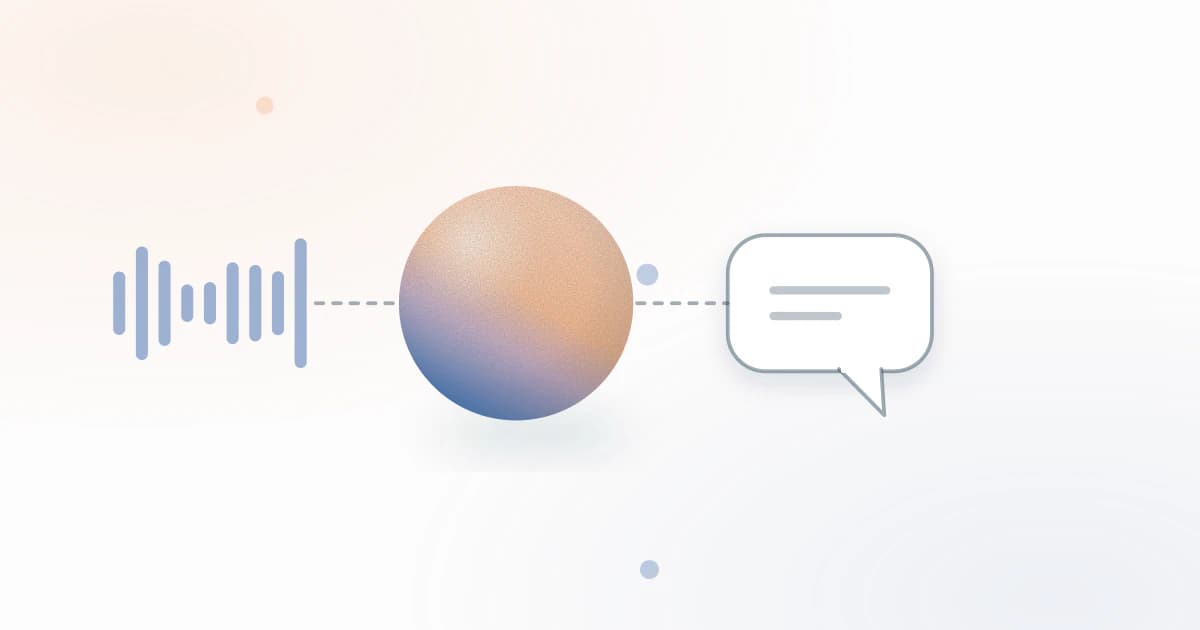
Natural language understanding (NLU) is used to grasp the user’s intent and the context of their request. Natural language generation (NLG) builds the reply as clear, appropriate sentences. For voice, IBM states that analysing a spoken request combines automatic speech recognition (ASR) with language understanding; to reply out loud, the response must then be rendered by a synthetic voice.
AWS notes that chatbots were traditionally rule-based and followed predefined scripts, suited to simple tasks such as FAQs. Systems built on large language models understand the context of a conversation better and handle more complex exchanges.
One building block is often left out of presentations: the knowledge base and the instructions. Business conversational AI must rely on the company’s information (website, documents, published prices, internal rules) and be able to recognise what is not in it. That is what sets it apart from a general-purpose assistant.
Written and spoken: two different sets of constraints
In writing, users re-read, scroll, and can click a link or copy an address. Replies can be a little longer and more structured, and response time is less critical. The difficulties come mainly from typos, very short messages and questions asked in several instalments.
Spoken, everything happens in real time. You need short answers, one question at a time, and the ability to handle interruptions, background noise, proper names and numbers that have to be spelt out. A list that works perfectly well in writing becomes hard to follow on the phone.
Voice also raises a personal data issue. When publishing its white paper on voice assistants, the CNIL, France’s data protection authority, pointed out that the voice is a biometric characteristic that can make it possible to identify a person, and stressed the need for transparency and secure systems in order to comply with the GDPR.
The channels: website, phone, messaging apps
On a website, conversational AI takes the form of a widget that answers at the moment visitors are looking for information: opening hours, services, service area, terms. On the phone, it handles requests that are often more pressing, from people who prefer talking to writing. On messaging apps such as WhatsApp or Messenger, conversations are asynchronous: the customer writes, goes away, and comes back later.
Each channel has its own rules. On the WhatsApp Business Platform, for example, Meta specifies that a message from the user opens a 24-hour customer service window, during which the business can reply freely; outside it, only pre-approved message templates can be sent.
The key point, when several channels are open, is consistency: the same information base must feed the chat, the phone and the messaging apps. Otherwise, a customer gets two different answers to the same question depending on how they contact the business.
The criteria for choosing
Start with where the answers come from: does the tool answer only from your information, and what does it do when the answer is not there? A good system says so, offers to pass the request on and collects contact details. Then check the handover to a human: at what point, to whom, and with what summary of the conversation.
Look at what the tool can do beyond the conversation (record a request, offer an appointment in your calendar, transfer a call), the channels covered, and what you get afterwards: history, transcript, summary. On data, ask where it is hosted and how long it is kept; in France, the CNIL points out that the retention period must match the purpose pursued, and that a cookie set only when the user activates the chatbot, and used solely to make it work, does not require consent.
Finally, test before you commit, with your real questions, including the hardest ones. Alyas, for example, offers a 10-day trial: the agent answers the phone, announcing that it is an AI and that the call is recorded, and responds in writing on your website, using the information you provide; call recordings, transcripts and summaries are hosted in the European Union.
Frequently asked questions
Are conversational AI and chatbots the same thing?
Not exactly. A chatbot (“dialogueur”, to use the official French term) is one application of conversational AI, usually in writing. Conversational AI refers more broadly to the techniques that make natural-language dialogue possible, including spoken dialogue, on the phone or through a voice assistant.
What is the difference between conversational AI and generative AI?
Generative AI produces content: text, images, sound. Conversational AI refers to using language understanding and generation techniques to hold a dialogue with a person. Recent conversational agents use generative models to formulate their answers, but they also need reliable sources and rules to stay accurate.
Can you use the same conversational AI on the phone and on your website?
Yes, provided it relies on the same information base and adapts how it answers to the channel: short answers and one question at a time when speaking, more structured answers in writing. That is the best way to give customers the same information, however they get in touch.
Sources
- AWS — What is Conversational AI?
- IBM — What is conversational AI?
- FranceTerme — “Dialogueur” (French official gazette, Journal officiel, 9 December 2018) (in French)
- CNIL — “À votre écoute”: the CNIL publishes its white paper on voice assistants (7 September 2020) (in French)
- CNIL — Chatbots: the CNIL’s advice on respecting people’s rights (in French)
- Meta for Developers — Service messages (WhatsApp customer service window)