
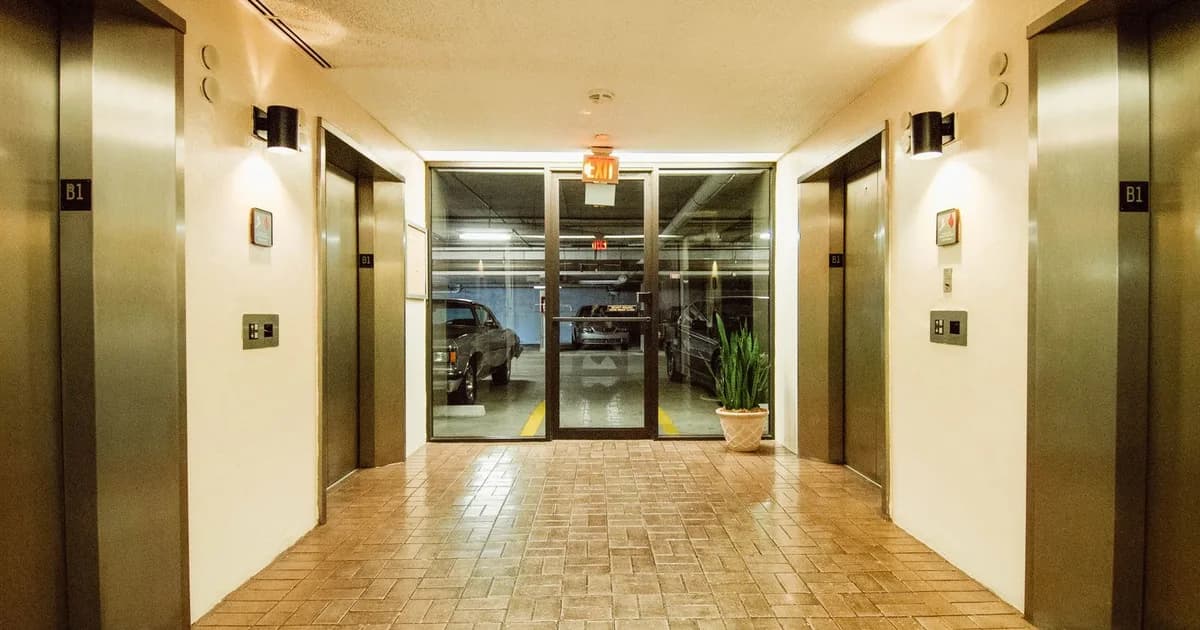
A night call, three possible callers
When equipment stops at night, the call may come from a trapped user, from a caretaker or a building manager, or from a customer calling back for the second time. Each has a different role, and each does not necessarily dial the right number. On the legal side, it is the lift’s owner who signs the written maintenance contract with a company (Article R134-7 of the Code de la construction et de l’habitation, the French Construction and Housing Code); it is the company that carries out the work.
The first task of a night-time set-up is therefore to know who is calling whom, and to give each caller a short path to the person who can act.
What the rules provide for lifts
Decree No. 2004-964 of 9 September 2004 on lift safety laid the foundations for maintenance and the written contract. Following the recodification of the Code de la construction et de l’habitation, its provisions now appear in the section “Sécurité des ascenseurs” (lift safety), Articles R134-1 et seq. Article R134-6 provides for visits every six weeks, the checking, at the same frequency, that the alert and communication means with an intervention service work properly and, in the event of an incident, the interventions to free people trapped in the car, the repair and the return to normal operation. Article R134-7 requires a written contract of a minimum duration of one year, including in particular a maintenance logbook and penalties for non-performance.
The order of 18 November 2004 on the maintenance of lift installations specifies, in its Article 12, that the release of people trapped in the car must be provided for 24 hours a day, every day of the year, and that repair interventions must be carried out whatever the day, working or not. All maintenance contracts must include a clause on release, repair and return-to-service times, and a clause on informing users during breakdowns. The times themselves are therefore to be read in the contract.
Articles R134-6 and R134-7 and the order were amended in March 2026 (Decree No. 2026-166 and order of 4 March 2026, in force since 1 April 2026); Article 12 of the order, however, has been unchanged since 2004. Check the version that applies to your contracts.
Beyond lifts
For other equipment (communal heating, refrigeration, automatic doors), the scope of on-call duty, the hours covered and the response times are read first in the maintenance contract, possibly supplemented by regulations specific to the equipment or the site, to be checked case by case: the call-handling set-up described below remains valid, but the response-time commitments change from one contract to another.
Organising call handling before the technician
A well-handled night call comes down to a few pieces of information, collected in the same order: the caller’s name and call-back number, the site or address, the identifier of the lift or equipment, the nature of the problem, and whether or not people are trapped. If the caller reports smoke or the start of a fire, the instruction directs them to the fire brigade (18) or to 112, which routes to the right service; if a trapped person feels unwell, to the Samu (15, France’s emergency medical service) or to 112. This direction comes before any passing on to the company.
Next, decide in advance to whom the call is transferred and what happens if that number does not answer: a second attempt, a message left for the technician, a follow-up at a set time. A single, documented path avoids the caller staying on the line without knowing who is taking charge. The on-call rota, for its part, remains the company’s business: call handling does not replace it.
Keeping a record of response times
Since contracts must include a clause on release, repair and return-to-service times, it is useful to be able to reconstruct the chronology of a night: time of the call, time of the handover, time the technician arrived, time of return to service. This record complements the maintenance logbook provided for by Article R134-7 and can be used in the event of a disagreement with a customer.
Alyas can handle the telephone part of this chain: it answers 24/7 from the information you give it (site addresses, procedure, instructions), announces that it is an AI and that the call is recorded, collects the caller’s details and places the transcript and summary in your workspace. If it does not know how to answer, it says so and offers to pass the request on; the caller can ask to be transferred to a single number, that of your on-call technician. It does not manage the on-call rota and does not assess on its own how serious a situation is. The trial is free for 10 days, with no card required.
Frequently asked questions
Who must have a lift maintained?
Under Article R134-7 of the French Construction and Housing Code, the owner signs a written maintenance contract with a company whose staff are trained. The company carries out the maintenance obligations set out in the contract.
Must it be possible to free a trapped person at night and on public holidays?
Article 12 of the order of 18 November 2004 provides that the release of people trapped in the car must be organised 24 hours a day, every day of the year, and that repairs must be carried out whatever the day, working or not. The precise times are set by the contract.
What must a lift maintenance contract contain?
Article R134-7 lists minimum clauses, including: performance of the maintenance obligations, a duration of at least one year, availability of spare parts, a maintenance logbook, insurance, penalties, subcontracting and price revision. The 2004 order adds a clause on release, repair and return-to-service times and a clause on informing users.
Sources
- Légifrance, France’s official legal database (in French): Code de la construction et de l’habitation, section Sécurité des ascenseurs (R134-1 to R134-48)
- Légifrance (in French): Article R134-6 of the Code de la construction et de l’habitation
- Légifrance (in French): Article R134-7 of the Code de la construction et de l’habitation
- Légifrance (in French): Decree No. 2004-964 of 9 September 2004 on lift safety
- Légifrance (in French): order of 18 November 2004 on the maintenance of lift installations
- ANIL, the French national housing information agency (in French): safety, maintenance and technical inspection of lifts (2004 analysis, numbering prior to the recodification)
- Service-Public.gouv.fr (in French): emergency numbers (15, 17, 18, 112) and helplines