
Start by observing, not by buying
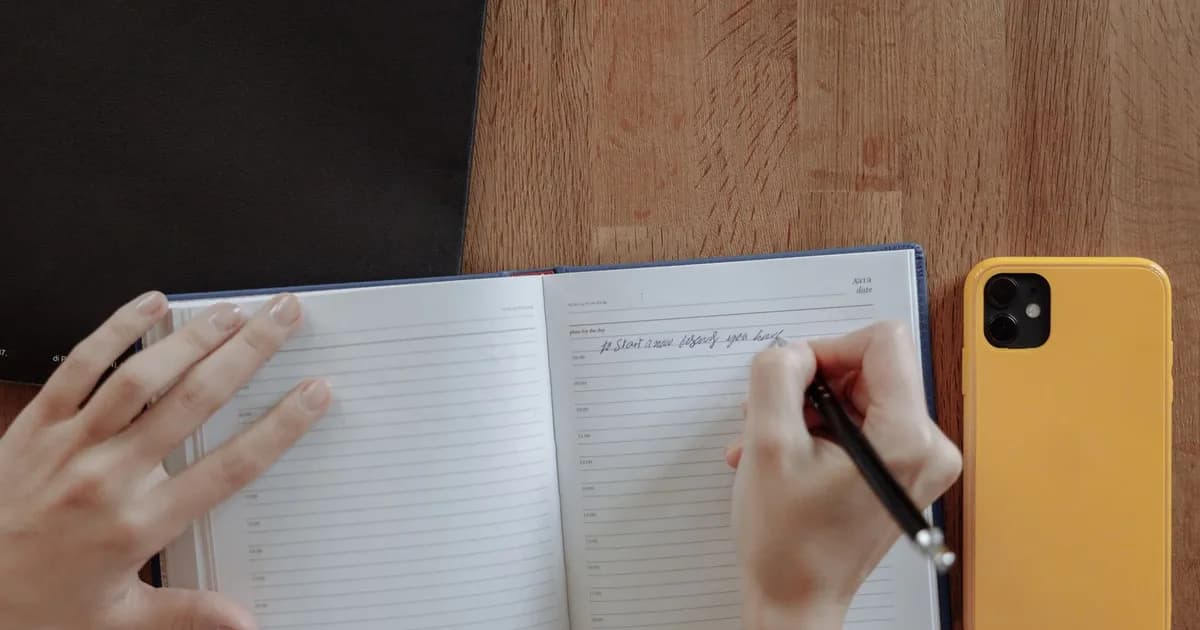
Before comparing solutions, a qualitative self-diagnosis is enough to get started. The aim is to spot the situations that keep recurring in your day. For a week or two, keep a simple notebook or spreadsheet to hand: note the unanswered calls visible in the phone’s call log, the messages left, the callbacks to make and every moment when a call interrupted your work.
This diagnosis deliberately sets no numerical threshold. The number of calls that becomes a problem depends on your trade, your season and what an enquiry is worth to you. What matters is recognising patterns: the same situation experienced three times in a week is an identifiable pattern, whereas a general impression stays vague.
To keep the log usable, organise it in three columns: the moment (day, time slot), the situation (missed call, message left, interruption, forgotten callback) and the consequence you observed (customer lost sight of, delay, irritation). At the end of the period, go over it with the people concerned: they will recognise situations you had not seen. If you work alone, ask a regular customer or a close colleague how it feels when they try to reach you.
Customer-side signs: unanswered calls and callbacks piling up
The first sign shows up in the call log: unknown numbers that rang without being answered, sometimes several times on the same day. Another clue: customers who start the conversation with “I tried to reach you”, or who leave several messages about the same request because they have had no reply.
A third sign concerns follow-up. Voicemails are listened to late, nobody knows who is supposed to call a given contact back, a promised callback gets lost between two jobs. In that case, the issue is not the phone line itself but what happens after the call. The cost of missed calls is covered in a separate guide; here, we stick to the warning signals.
Team-side signs: interruptions and reliance on one person
Look at the interruptions. You leave a worksite, a consultation, a meeting or a file to pick up, or conversely you let it ring during those moments knowing you will have to catch up on the call later. Both situations can wear you down. If only one person knows how to answer certain questions, their absence (holiday, illness, travel) leaves a gap in reception.
Other clues: the owner’s personal phone rings in the evening or at weekends with work requests; information taken verbally ends up on scraps of paper or in someone’s memory; the same customer question (opening hours, area covered, steps to follow) gets different answers depending on who picks up.
One last clue concerns screening: if you hesitate to answer because you do not know in advance what you are going to get (a simple request, a complaint, a sales pitch), the call has not been qualified. A first level of reception, human or automated, that clarifies the request before passing it to you can then lighten the load. Conversely, if your calls are few and well identified, a light organisation may be enough.
Organisation signs: missing instructions and unclear follow-up
Ask yourself a few simple questions. Does everyone know who calls back a contact who left a message, and within what time? Is there a written list of what can be said to a caller and what should be avoided? What do you say when you do not know the answer? Are the hours when you can be reached announced on the greeting message, on the website and on your business listing? If the usual answer is “it depends who is in”, the need is first of all organisational.
If you record calls, for example to train a team or monitor quality, the CNIL (France’s data protection authority) points out that recording must remain necessary and proportionate and that callers must be informed, in particular by a spoken notice at the start of the conversation. It is better to think about this when you define your organisation than to discover it afterwards.
What to do when several signs overlap
Proceed in three stages. First, set the rules: response hours, the person in charge of calling back and the target time, the information that may be given, the situations where you hand over. Next, choose the level of help: a well-written voicemail greeting, a split of roles within the team, an external answering service or a voice agent; the choice between AI and outsourcing is covered in a dedicated guide. Finally, repeat the same log a month later to check that the situations described above are becoming less frequent.
Alyas is an AI voice agent that answers the phone using the information you give it (website, text, PDF), 24 hours a day. At the start of the call it announces that it is an AI and that the call is recorded, captures the caller’s contact details and leaves the transcript and summary in your workspace. If it does not know, it says so and offers to pass the request on. The trial is free for 10 days, with no card required.
Frequently asked questions
Do I need to count missed calls to know whether I have a problem?
Counting helps, but a qualitative log is enough to get started: spot the situations that keep coming back (customers calling again, messages with no follow-up, interruptions). What matters is recognising patterns in your own business, not reaching a theoretical threshold.
Is a single sign enough to justify changing how reception is organised?
An isolated sign can be fixed with a simple rule, for example a fixed slot for callbacks. When several signs overlap, on the customer side, the team side and the instructions side, it becomes worth formalising reception more broadly.
Do I have to tell callers if calls are recorded?
According to the CNIL (France’s data protection authority), callers must be told about the recording, and the information is given in particular through a spoken notice at the start of the conversation. The CNIL page cited as a source details the other items to communicate.